
Artificial Grass Face Weight Guide (What It Is & How to Compare Turf Density)
Artificial grass face weight measures the amount of yarn used per square yard (oz/yd²) and is one of the most important factors affecting turf density, durability, and overall performance.
What Is Artificial Grass Face Weight?
Face weight is the total weight of the turf fibers (yarn) per square yard, expressed in ounces (oz/yd²). It represents how much material is used in the visible grass layer, excluding the backing.
This metric is widely used to compare artificial grass products and estimate how dense, durable, and substantial the turf will feel.
What Face Weight Tells You About Turf Performance
Turf Density
Higher face weight typically means more yarn per square yard, resulting in a denser and more compact surface.
Durability
Heavier turf generally performs better under foot traffic, pets, and frequent use, as more material helps resist wear and flattening.
Appearance
Higher face weight contributes to a fuller, thicker look, especially when combined with appropriate pile height.
Cost vs Value
Lower face weight products use less material, making them more affordable - but often less durable over time.
Typical Artificial Grass Face Weight Ranges
| Face Weight | Typical Use |
|---|---|
| 20 - 40 oz | budget turf, light use |
| 40 - 60 oz | residential landscaping |
| 60 - 80 oz | high-traffic areas, pets |
| 80+ oz | premium dense turf |
Face Weight vs Turf Density (Important Distinction)
Face weight is a strong indicator of density - but it is not the only factor.
True turf density depends on a combination of:
- Pile height (longer fibers spread weight differently)
- Stitch rate and gauge (how closely fibers are packed)
- Yarn type and shape (affects structure and resilience)
For example, two products with the same face weight can feel completely different:
- One may be dense and firm (shorter pile, tight stitching)
- Another may feel softer but less supportive (longer pile, looser structure)
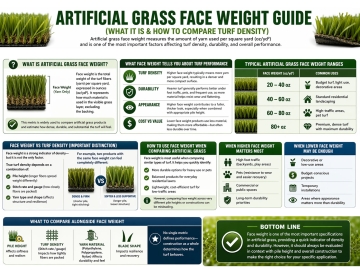
How to Use Face Weight When Comparing Artificial Grass
Face weight is most useful when comparing similar types of turf. It helps you quickly identify:
- More durable options for heavy use or pets
- Balanced products for everyday residential lawns
- Lightweight, cost-efficient turf for low-traffic areas
However, comparing face weight across very different pile heights or constructions can be misleading.
When Higher Face Weight Matters Most
Choose higher face weight if your project involves:
- High foot traffic (backyards, play areas)
- Pets (resistance to wear and easier recovery)
- Commercial or public spaces
- Long-term durability priorities
When Lower Face Weight May Be Enough
Lower face weight can be a practical choice for:
- Decorative or low-use areas
- Budget-conscious projects
- Temporary installations
- Areas where appearance matters more than durability
What to Compare Alongside Face Weight
To accurately evaluate artificial grass quality, always consider face weight together with:
- Pile height (affects softness and realism)
- Turf density (stitch rate / gauge)
- Yarn material (polyethylene, polypropylene, nylon)
- Blade shape (impacts resilience and recovery)
No single metric defines performance - construction as a whole determines how the turf behaves.
Key Takeaways About Face Weight
Face weight is a key indicator of how dense and durable artificial grass will be, but it should never be evaluated in isolation. A higher face weight generally means more material and better resistance to wear, yet the actual performance depends on how that weight is distributed across pile height, stitch rate, and yarn construction.
When comparing artificial grass, use face weight as a quick reference within similar products - not as a standalone measure of quality. The best choice comes from balancing face weight with overall design, ensuring the turf matches your intended use, whether for durability, comfort, or appearance.